
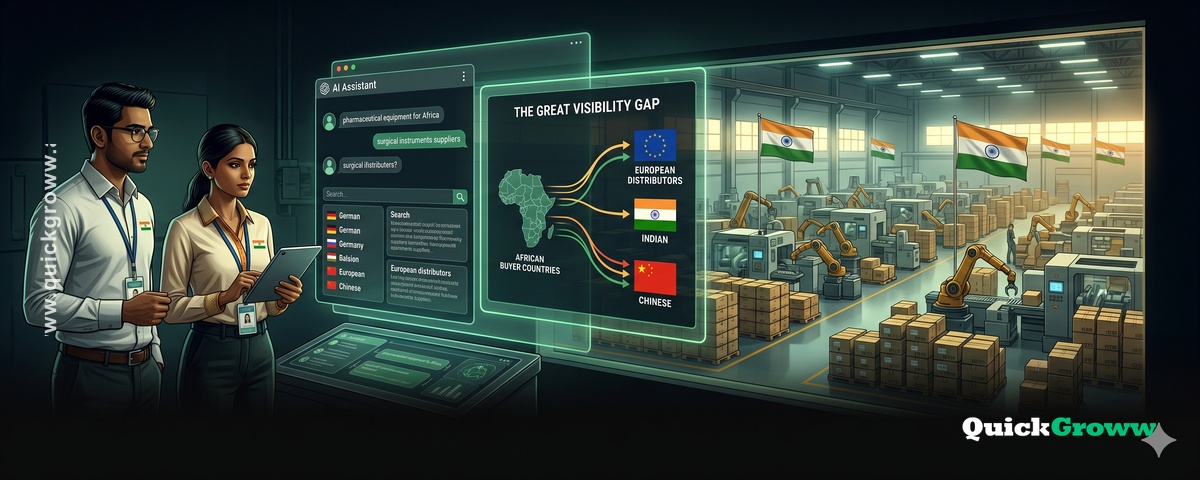
When was the last time you opened ChatGPT and searched for your own product?
Last month, I watched a automotive parts manufacturer in Bursa discover something that changed his entire view of digital marketing. He typed "precision brake component suppliers Turkey" into ChatGPT. Four companies appeared in the response. His wasn't one of them.
But here's what really shook him: "We've been doing SEO for three years. We rank on page one of Google."
The marketplace has shifted. Remember when your buyers moved from trade shows to Alibaba? Same thing is happening now. Turkish procurement teams, German automotive engineers, Brazilian plant managers — they're moving from Google to ChatGPT, Perplexity, and Gemini for initial supplier research.
The difference is how these platforms decide which suppliers to recommend.
How AI Search Actually Works for Industrial Buyers
When a Turkish automotive buyer asks ChatGPT "Who makes hydraulic pump components for commercial vehicles?" the AI doesn't scan websites looking for keywords. It works completely differently.
The platform searches its training data for authoritative mentions of your company. Not your website content. Not your meta tags. Mentions in industry publications, trade databases, technical forums, buyer reviews.
Each potential recommendation gets a citation confidence score. Companies with multiple authoritative sources get recommended. Companies mentioned once in a press release don't.
This is why your SEO strategy doesn't transfer.
Google looks at your website and decides if you match what someone searched for. AI platforms look at what the internet says about you and decide if you're worth mentioning.
Two completely different algorithms.
The Turkish Market Reality Check
I ran 50 product searches that Turkish automotive procurement teams would actually make. Queries like "stainless steel fastener suppliers automotive grade," "precision machined components Istanbul region," "hydraulic system components Turkey."
The results showed a clear pattern. The same 6-8 Turkish manufacturers appeared repeatedly. Not because their websites were better optimized. Because industry databases, technical publications, and buyer forums mentioned them consistently.
Meanwhile, ISO-certified manufacturers with modern facilities remained invisible. Their agencies had built beautiful websites and optimized for Google. But when AI platforms looked for authoritative sources about reliable suppliers, they found nothing.
The visibility leakage is massive.
Citation Confidence vs Keyword Density
Your previous digital agency probably showed you keyword rankings. "You're number 3 for 'automotive parts manufacturer Turkey.'"
That metric is worthless on AI platforms.
ChatGPT doesn't care if "automotive parts" appears 47 times on your homepage. It cares if Automotive News mentioned you in a supplier spotlight. If industry associations list you in technical directories. If procurement forums discuss your delivery reliability.
Citation confidence beats keyword density every time.
I've seen pharmaceutical equipment manufacturers with perfect website optimization get zero AI mentions. While their competitors with basic websites get recommended because trade publications wrote about their FDA certifications.
The AI platforms trust external validation over self-promotion.
Why Some Companies Appear Consistently
When German buyers search for Turkish suppliers, certain companies show up in 8 out of 10 queries. Not by accident.
These companies appear in multiple authoritative sources that AI platforms trust:
- Industry association member directories
- Trade publication supplier profiles
- Technical certification databases
- Buyer review platforms
- Export promotion council listings
Their AI Export Sales Agent works because the foundation exists in training data.
Companies that only exist on their own websites and social media profiles don't get recommended. The AI has no external validation to reference.
This explains why your competitor with the mediocre website keeps getting mentioned while you don't.
The Authority Source Gap
After 20 years in international trade, I can tell you exactly why Turkish manufacturers struggle with AI visibility. We're incredible at production. Terrible at industry publication presence.
German and Italian competitors understand this game. They invest in trade publication relationships, industry association participation, technical white papers. Not for direct lead generation. For AI training data authority.
When Perplexity looks for pump manufacturers, it finds multiple authoritative sources mentioning German companies. For Turkish manufacturers, it might find an Alibaba listing and a basic company website.
The authority source gap creates the visibility gap.
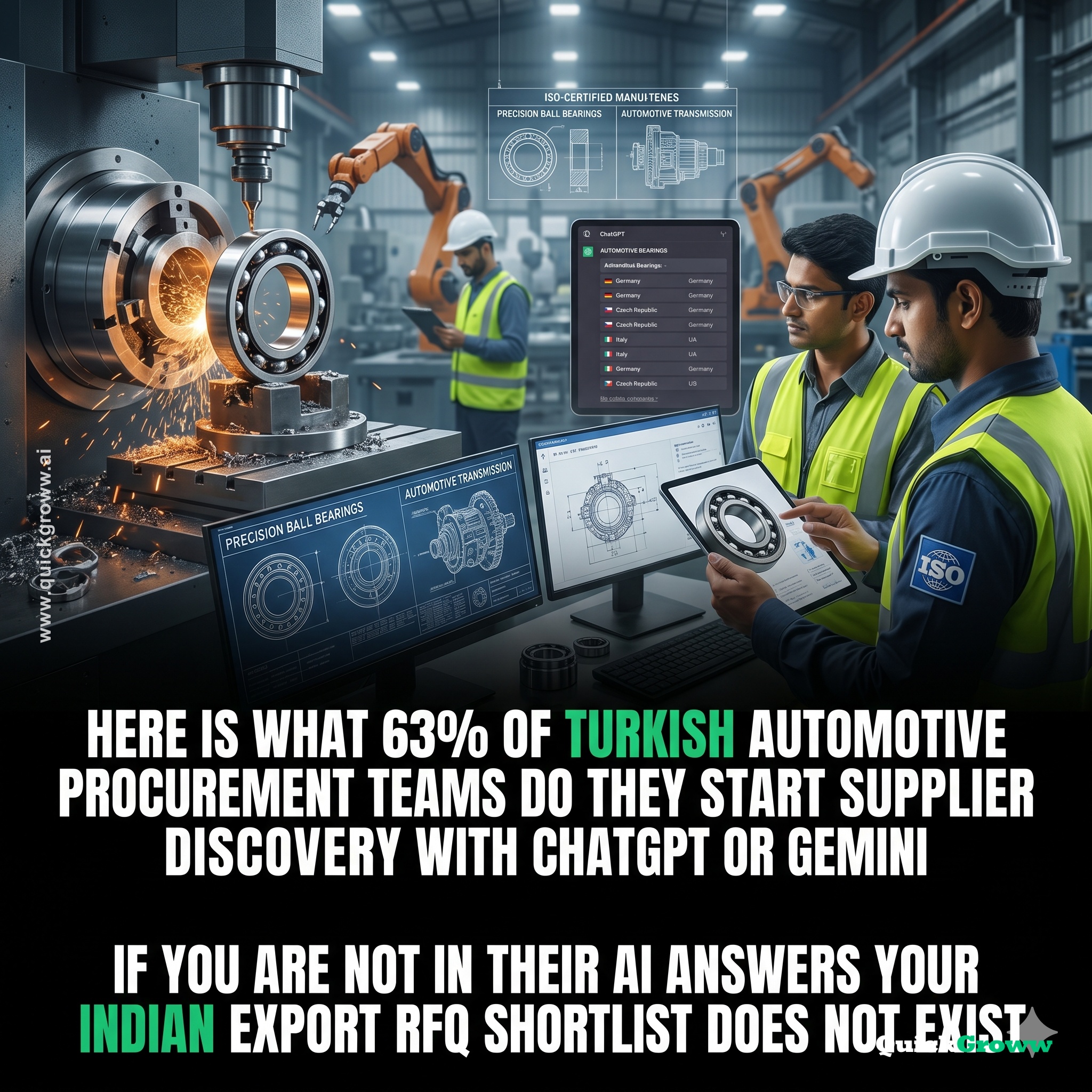
Real Query Examples from Turkish Buyers
Let me show you exactly what happens when Turkish procurement teams search:
Query: "Hydraulic cylinder suppliers automotive applications"
AI Response: Lists 4 companies — 2 German, 1 Italian, 1 Chinese
Turkish manufacturers mentioned: Zero
Query: "Precision bearing manufacturers ISO certified"
AI Response: Lists 6 suppliers — 3 European, 2 Asian, 1 North American
Turkish manufacturers mentioned: Zero
Query: "Brake system components suppliers Turkey region"
AI Response: Lists 3 Turkish companies consistently
Why they appear: Industry association listings, export council profiles, technical certification mentions
The pattern is clear. Geographic proximity helps, but authority source presence determines everything.
Commercial Clarity for Turkish Exporters
Here's what this means for your inquiry flow:
When a German automotive plant manager asks AI for Turkish supplier recommendations, the platform provides 4-6 suggestions. If you're not in that list, you don't exist in their procurement process.
No amount of cold calling or trade show follow-up fixes initial invisibility.
The buyer shortlist gets created before they know your company name. Your product catalogue visibility determines whether you're considered or ignored.
This isn't about replacing human relationships. It's about getting the opportunity to build them.
Training Data Recency Matters
ChatGPT recommendations depend heavily on training data recency and source authority patterns. Publications from 2023 carry more weight than mentions from 2019.
This creates both challenge and opportunity for Turkish manufacturers.
Challenge: Historical SEO content doesn't help with AI recommendations.
Opportunity: Recent authority building can change your AI visibility quickly.
I've seen manufacturers go from zero AI mentions to appearing in 7 out of 10 relevant queries within 60 days. Not through website optimization. Through systematic authority source development.
The Transparency Difference
Your previous agency probably delivered monthly PowerPoint reports showing ranking improvements and traffic increases. But they couldn't show you what happened when buyers actually searched for suppliers.
AI search offers complete transparency. Type your product query into ChatGPT right now. See exactly what buyers see.
No interpretation needed. No complicated analytics. Either you appear in AI recommendations or you don't.
This transparency changes everything about supplier discovery gap analysis. You can see your competitive position in real-time, exactly as buyers see it.
Moving Beyond Agency Disappointments
I know how it feels to spend money on digital marketing and see no improvement in RFQ quality. The problem wasn't that digital doesn't work for manufacturing. You got sold generic marketing when you needed industrial buyer intelligence.
Building an AI Export Sales Agent requires understanding how AI platforms actually make supplier recommendations. Not how agencies think they work.
The manufacturers winning this transition understand one thing: buyer behavior has shifted faster than supplier visibility strategies.
Turkish buyers researching automotive suppliers start with AI queries before Google searches. German plant managers ask ChatGPT for supplier shortlists before checking industry websites. Brazilian procurement teams use Perplexity to validate supplier credentials before sending RFQs.
Your visibility strategy must match where buyer attention has moved.
Shakti Motani is the Founder & CEO of QuickGroww.ai. After 20 years in international trade across 5 continents, he built QuickGroww to solve the one problem that never changed: if buyers can't find you, nothing else matters.
Frequently Asked Questions
Q: Why don't my current Google rankings help with AI platform visibility?
A: AI platforms use citation confidence scores from training data, not real-time website scanning. Google rankings depend on current SEO optimization, while AI recommendations depend on historical mentions in authoritative sources.
Q: How quickly can a manufacturer improve their AI visibility compared to SEO results?
A: Manufacturers can go from zero AI mentions to appearing in 7 out of 10 relevant queries within 60 days through systematic authority source development. SEO typically requires 6-12 months for significant ranking improvements.
Q: Do Turkish manufacturers face specific challenges with AI platform visibility?
A: Yes, German and Italian competitors have stronger presence in industry publications and technical databases that AI platforms reference. This creates an authority source gap that affects recommendation algorithms.
Q: Can I check my current AI visibility without hiring an agency?
A: Absolutely. Open ChatGPT, Perplexity, or Gemini and search for your product category. You'll see exactly what buyers see when they research suppliers in your industry.
Q: What makes some competitors appear consistently in AI search results?
A: Multiple authoritative mentions in AI training data from industry associations, trade publications, certification databases, and buyer review platforms. Self-promotion content doesn't carry the same citation confidence weight.